
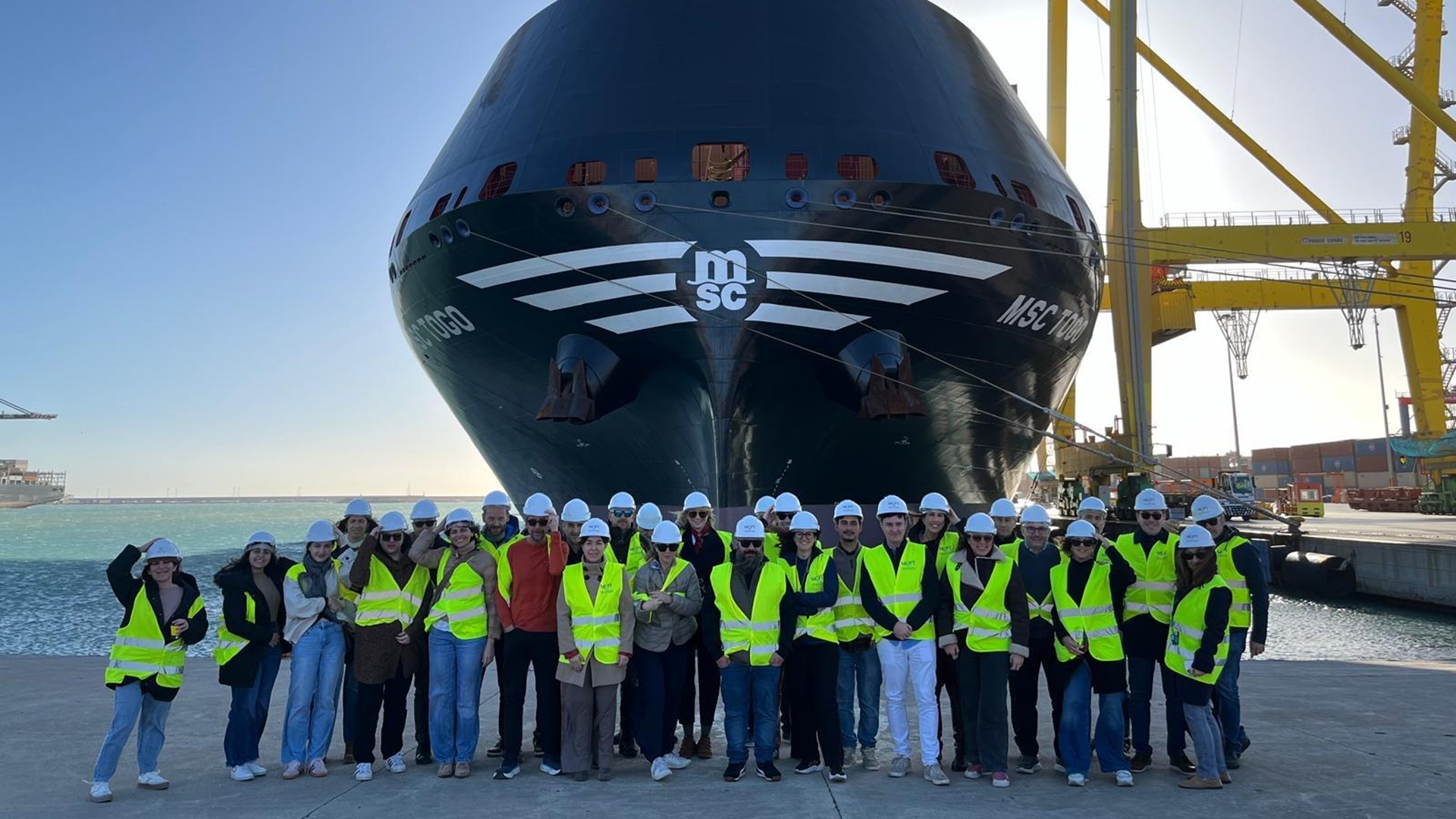
From 9 to 13 February 2026, START4.0 took part in the training activities of the European project Next Train Ports, funded under the Erasmus+ 2021–2027 Programme – Cooperation Partnerships for Vocational Education and Training (VET).
Representing the Competence Center were Alice Lupinacci, Junior Project Manager, and Giorgia Cesarone, CTO, who joined the dedicated training pathway for IT & Innovation middle managers — a key professional profile in leading digital and energy transition processes within European port environments.
What is Next Train Ports?
Next Train Ports aims to:
- Strengthen digital and strategic skills of port sector professionals
- Support energy transition and sustainability in ports
- Promote the use of innovative technologies such as AI, IoT, blockchain, digital twins and XR immersive training
- Foster collaboration among port authorities, terminal operators and logistics stakeholders
The project specifically focuses on advanced training for middle management profiles, who are responsible for translating technological innovation into concrete operational solutions.
Training in Valencia: Digitalisation, Cybersecurity and Smart Ports
The training week at Fundación Valenciaport combined:
- Classroom lectures
- Strategic workshops
- Technical site visits
- Immersive virtual reality experiences
Digitalisation and Digital Transformation in Ports
Technical sessions explored the core pillars of digital transformation applied to port logistics:
- Operational efficiency
- Cargo traceability
- IoT system integration
- Artificial intelligence and machine learning
- Big data and analytics
- 5G and network slicing
- Blockchain for document management and supply chain optimisation
Special attention was paid to the barriers to digital transformation, including organisational resistance to change, regulatory complexity, infrastructure obsolescence and environmental challenges linked to emissions reduction.
Focus on Cybersecurity and Port Infrastructure Protection
A dedicated module addressed cybersecurity in ports, presenting active projects and practical use cases in:
- OT systems protection
- Supply chain security
- Infrastructure monitoring through drones
- Data governance and EU regulatory compliance
Cybersecurity is now a strategic priority to ensure operational continuity and resilience of critical port infrastructures.
Technical Visits to the Port of Valencia: Innovation in Practice
One of the most impactful parts of the programme was the series of technical visits to the Port of Valencia, one of Europe’s leading hubs, with over 100 daily lines connecting five continents.
Participants were able to observe:
- Automated gate control systems
- Container scanning and monitoring technologies
- Quay operations and cargo handling processes
- Import/export logistics management
- The central control room and supervision systems
- Maritime pilot training simulators
- The berth coordination centre managing vessel allocation
These visits provided a concrete understanding of how innovation, automation and digital strategy are integrated into the daily operations of a major international port.
Strategic Workshops and the Port Community System
During the digital strategy module, participants were divided into working groups and asked to design a digitalisation plan for a Port System Authority.
The activity focused on:
- Digital transformation governance
- Integration between port authorities and stakeholders
- Development of a Hyperconnected Port Community
- The enabling role of the Port Community System (PCS)
This exercise highlighted the importance of a systemic and multi-level approach in managing port innovation.
Immersive XR Training: Realistic Operational Scenarios
A distinctive element of the project is the use of immersive technologies. During the programme, XR headsets were used to simulate realistic scenarios related to:
- Cybersecurity incidents
- Environmental management challenges
- Operational procedures involving alternative fuels such as hydrogen
Immersive training represents a powerful tool to enhance both technical and decision-making skills in complex and high-risk environments.
Competences for Innovation Managers in Ports
The final day focused on defining the professional profile of IT & Innovation middle managers, identifying:
- Required technical competences (AI, cybersecurity, data management)
- Leadership and change management capabilities
- Alignment between digital innovation and sustainability objectives
- Educational background and training pathways
This step is essential to shape a new generation of professionals capable of leading European ports through the twin digital and energy transition.
The Value for Start 4.0
Start 4.0’s participation in Next Train Ports strengthens its role as:
- A competence center for technological innovation
- An active player in port digitalisation
- A European partner in advanced training initiatives
The Valencia experience represents a strategic milestone in consolidating expertise, international partnerships and replicable innovation models for Italian and European ports.